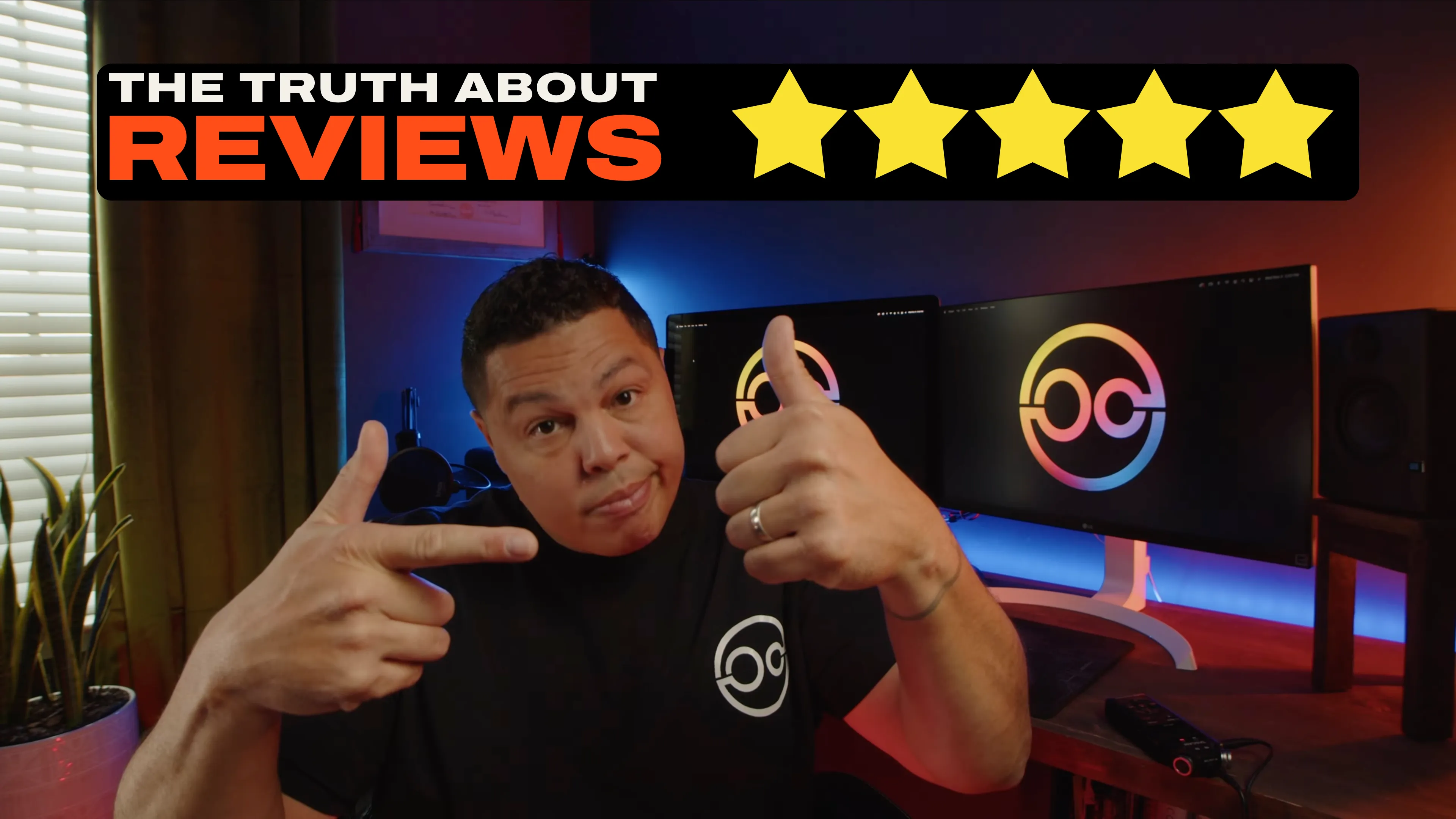
In April 2026 Google tightened the rules on how businesses ask for reviews. Review quotas for your techs are out. Asking a customer to mention a tech by name is out. Standing there while they type it on your tablet is out. Gift cards and discounts were already out. On top of that, review recency now matters more than review count, so the 300 reviews you collected three years ago aren't carrying you the way they used to.
Picture the end of a good job. Unit's running, the customer's happy, and your tech pulls out the tablet and says "hey, would you mind leaving us a review real quick? If you can mention my name in it, that helps me out."
That's a solid moment. Customer's in a good mood, the work is fresh, the ask feels earned.
It's also, as of April 2026, three separate violations of Google's review policy.
Google updated its Maps content policy in April 2026. The changes are narrow. They're aimed at exactly one thing: how businesses solicit reviews. And they hit home service harder than almost any other industry, because the tactics Google just banned are the tactics the trades built their whole review process on.
Here's Google's own language on what merchants may not do:
There's one more that catches a lot of shops off guard. Google treats a review from anyone with a conflict of interest as rating manipulation, and that explicitly includes current and former employees. Your techs can't review the company. Neither can your brother-in-law who did the drywall.
Two things, and one of them is worse than most owners expect.
Google's automated systems pull the reviews without telling you. You won't get an email. You'll just notice your count went down, or you won't notice at all. If the pattern keeps up, enforcement escalates from removing individual reviews to restricting the profile itself.
The second thing is the FTC. Their Consumer Reviews and Testimonials Rule took effect October 21, 2024, and it carries civil penalties of up to $53,088 per violation. The FTC counts each fake or improperly obtained post as its own violation. That's not a Google problem you can appeal. That's a federal one.
Nobody's saying the FTC is coming after a four-truck plumbing shop tomorrow. But "we gave out $25 gift cards for reviews" is a paper trail, and it's the kind of thing that surfaces when a competitor or a disgruntled ex-employee decides to make it surface.
Most owners think of reviews like a bank balance. You build up 200 of them and that's money in the account.
That's not how it works anymore.
Whitespark's 2026 local ranking survey puts Google Business Profile signals at about a third of local pack weight, with review signals right behind. But inside that review bucket, recency has climbed into the top individual factors. A steady flow of new reviews beats a big pile of old ones.
The consumer side says the same thing. BrightLocal's 2026 survey found 74% of people weight reviews from the last three months more heavily than older ones. Your five-star review from 2022 isn't doing much work. Neither is your one-star from 2022, for what it's worth.
"A shop with 220 reviews and nothing new in eight months is quietly sliding, while the outfit down the road with 70 reviews and three new ones a week climbs past them."
The owner with 220 has no idea, because the number on his profile still looks great.
If you're going to track one review metric, track how many you got in the last 30 days. Not the total.
The standard advice is respond to everything. That advice holds up. BrightLocal found 80% of consumers are more likely to use a business that responds to all its reviews.
But the same survey found 50% say generic or templated responses make them less likely to choose a business.
Read those two numbers together. A copy-pasted "Thank you for your business! We appreciate you!" under forty reviews in a row isn't neutral. It's worse than saying nothing, because it tells the homeowner you're running a script.
Twenty different responses that each mention what the job actually was beat forty identical ones. "Glad we got that condenser back up before the weekend, Dave" does something a template can't.
The clock's tightening too. 19% of consumers now expect a same-day response to a review, up from 6% the year before. If that sounds familiar, it's the same pattern we covered in why home service businesses lose jobs before the phone rings twice. Response speed is turning into a trust signal everywhere, not just on the phone.
Negative reviews are where this pays off most. The homeowner reading a bad review isn't just judging the complaint. They're judging how you handled it. A calm, specific, non-defensive reply under a one-star does more for you than another five-star does.
This is the shift almost nobody in the trades has clocked yet.
BrightLocal's 2026 survey found the share of consumers using AI tools like ChatGPT, Gemini, and Google's AI Mode to find local businesses jumped from 6% to 45% in a single year. That makes AI the third biggest discovery channel for local businesses, behind Google and Facebook.
When a homeowner types "who's a good HVAC company near me" into ChatGPT, the model is pulling from what's publicly written about you. Your reviews are the bulk of that. Not just the star rating, the actual words.
Which means the content of your reviews matters in a way it didn't before. If thirty reviews mention emergency calls and weekend availability, that becomes what you're known for to a system that's summarizing you. If your reviews are thirty variations of "great job, thanks," there's nothing there for it to work with.
You can't script that. Google just made scripting it a violation. But you can earn it by asking at the right moment, on the right job, and letting the customer talk about what actually happened.
Every one of these is free. None of them require a marketing budget. Most of your competitors are still running the tablet handoff and the tech bonus, which means the shop that cleans this up first quietly wins the next twelve months of local search.
Reviews stopped being a scoreboard and turned into a compliance issue with a ranking factor attached. The tactics that built most contractor review profiles are now the tactics that put them at risk, and the counts those profiles are sitting on are worth less every month they go stale.
The fix isn't complicated. It's mostly stopping things you're already doing, then building a habit of asking cleanly and answering like a human. That's a week of work and a permanent advantage.
A marketing audit shows you where your reviews and your Google Business Profile actually stand, including what you're doing that Google no longer allows.
A marketing audit is an honest look at your Google Business Profile, your review flow, and whether the way you're collecting reviews would survive a policy sweep.
Book Your Call